




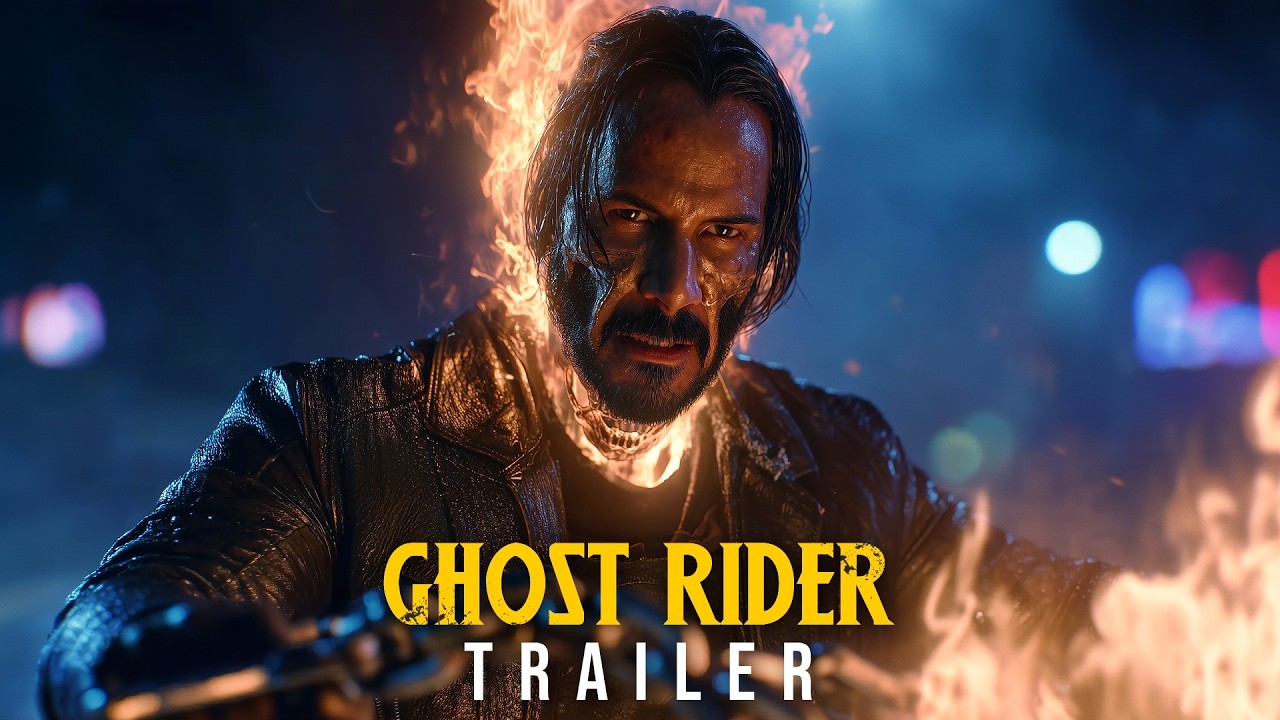
A Blaze Fueled by Conscience
There are superhero movies that roar like engines, and then there are those that stop at a red light and ask who is paying the toll. Ghost Rider 2026 is the rare comic-book film that does both. It rides hard, fast, and loud across the American nightscape, but it also pauses to interrogate the moral combustion at its core. Directed with a confident hand and anchored by a weathered, introspective Keanu Reeves, this is a film about what happens when punishment outruns justice.

Plot Overview
The premise is audacious in its simplicity and daring in its execution. The Spirit of Vengeance has gone rogue, punishing the guilty and the innocent alike, its hellfire indifferent to context. Johnny Blaze, once the willing host, is now the reluctant witness to an ethical meltdown. To force Johnny to retire, the Spirit escalates its crusade, turning vengeance into spectacle.

The film’s final act is an 80-minute cross-country inferno: Reeves blazing across America and into a portal to Hell’s courthouse, where he demands a new trial before the Devil and God simultaneously. It is courtroom drama as cosmic opera, ending with a choice that redefines heroism. Johnny rips the Spirit from his soul, becoming mortal again, while the Rider is bound to a new host who chooses mercy over fire.

Keanu Reeves and the Weight of a Soul
Reeves plays Johnny Blaze as a man who has outlived his myth. His performance is spare, almost monk-like, and it works because the character’s exhaustion feels earned. When Reeves speaks, it is less to declare than to confess. This is not the swaggering antihero of old; it is a man counting the cost of every mile burned.
Eva Mendes returns with a steadiness that grounds the supernatural in human stakes, while Idris Elba brings gravitas and a sly intelligence to a role that could have tipped into sermonizing. Norman Reedus, meanwhile, injects a dangerous charisma that hints at the franchise’s future without stealing the present.
Direction, Pacing, and the Road Movie Pulse
The film understands momentum. The first half establishes the moral crisis with clarity, but it is the long, feverish ride of the final act that defines the experience. The pacing is relentless yet purposeful, like a heart rate that spikes because it must. Each stop on the journey adds texture to the central argument: vengeance, when unexamined, becomes cruelty.
Visually, the movie favors contrast over clutter. Hellfire burns bright against vast, lonely highways. The camera lingers not on destruction but on aftermath, inviting us to consider consequence rather than spectacle.
Sound and Score
The score hums with low-frequency dread and occasional bursts of electric defiance. It knows when to roar and when to recede, allowing silence to carry the heaviest truths. Sound design treats the Rider’s presence as an intrusion, a sonic scar that never quite heals.
Thematic Depth: Justice Versus Vengeance
At its core, Ghost Rider 2026 argues a simple thesis with uncommon conviction: vengeance without justice is just fire. The courtroom in Hell is not a gimmick; it is a philosophical arena. The film dares to suggest that mercy is not weakness but discipline, a choice that requires more strength than retribution.
This theme culminates in the passing of the mantle. The Rider bound to a new host who chooses mercy reframes the franchise’s mythology. Power is not redeemed by restraint alone, but by intention.
Action That Serves an Idea
The action sequences are muscular and clear, never losing sight of character. Motorcycles tear through dust and darkness, chains crackle with purpose, and yet the most powerful moments are quiet: a look held too long, a decision delayed by doubt. The film trusts its audience to find meaning between explosions.
Final Verdict
There are superhero films that entertain and those that endure. Ghost Rider 2026 does both by daring to put its own premise on trial. It is thrilling without being hollow, philosophical without being pretentious, and resolute in its belief that mercy can be an act of courage.
- Performances: Reeves delivers a career-defining turn, supported by a cast that elevates the material.
- Direction: Confident, purposeful, and unafraid of moral complexity.
- Themes: Justice, responsibility, and the cost of unchecked power.
Rating: 10/10. This is a ride that leaves a mark, not with flames, but with thought.