



Introduction
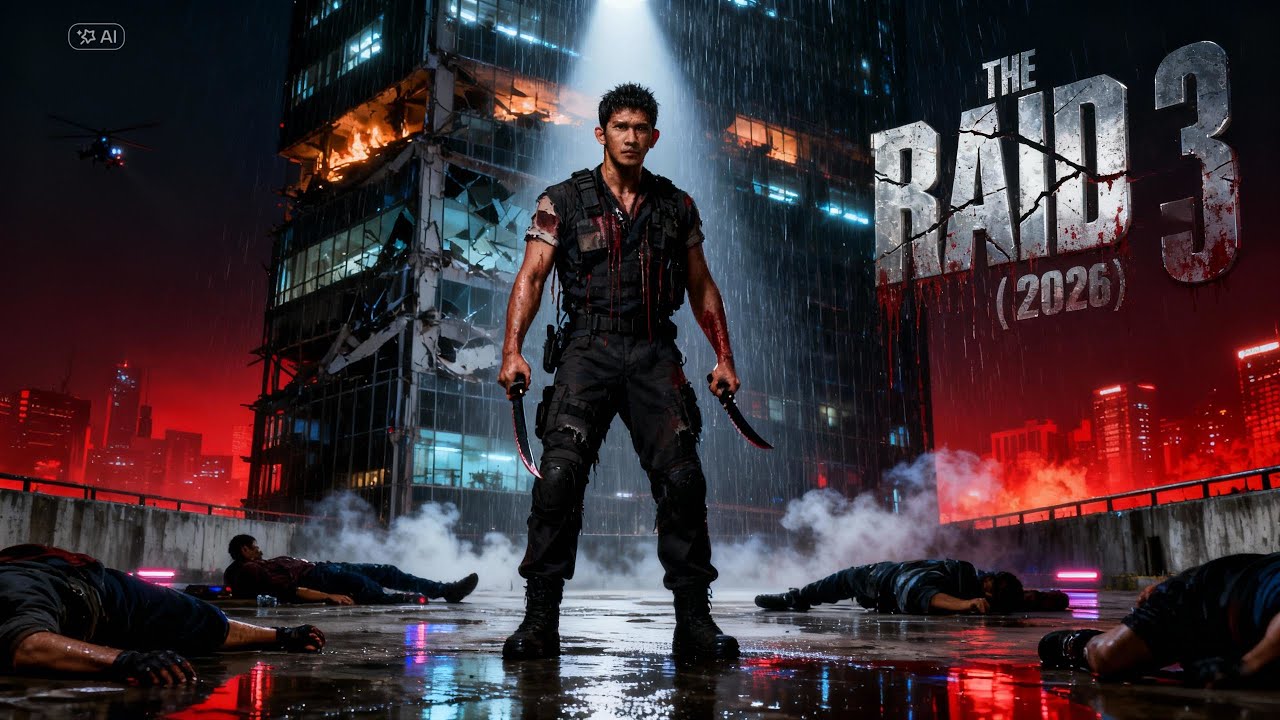
The Raid 3 arrives as a culmination rather than a mere continuation. It channels the raw energy of its predecessors while refining their chaos into something colder, more focused, and thematically richer. Instead of simply raising the body count, it raises the stakes of purpose, exploring how systems of power harden into machinery that crushes everything beneath them. What results is a ferocious, tightly honed action film that speaks in the universal language of motion.

Story and Setting
Set years after earlier events, the landscape has shifted from crumbling towers to a web of global influence. Crime is no longer confined to neighborhoods or gangs; it has become a network, a system built on order and profit. When that system is threatened, the answer is not containment but erasure. The narrative follows figures trapped inside this mechanism of control, forced into conflict where survival depends on instinct and moral clarity becomes almost impossible.

Key Plot Elements
- A syndicate that has transformed from street power into corporate shadow
- Combat driven by necessity rather than spectacle
- A purge rather than a raid, unfolding with mounting inevitability
The story moves with urgency but rarely with excess exposition. Character motivation is carried through action, glances, exhaustion, and the weight of consequence rather than extended dialogue.

Performances
Iko Uwais anchors the film with physical storytelling that borders on poetic. His movement expresses fatigue, resilience, and quiet defiance. Tony Jaa brings a coiled intensity, creating a presence that feels unpredictable yet precise. Scott Adkins adds brute elegance, his screen persona shaped by discipline and controlled fury. Together, they form a triangle of styles that never blurs into sameness; each identity is etched clearly in stance, rhythm, and reaction.
What Stands Out
- Physical commitment that turns choreography into character
- Minimalist dialogue supporting strong nonverbal performance
- Distinct fighting styles that define personality
Action and Choreography
The action is relentless but never careless. Instead of simply stacking fights, the film structures them like escalating arguments. Each sequence adds a new layer of desperation or revelation. The choreography avoids sensational gore while maintaining visceral impact, emphasizing velocity, timing, and spatial awareness. You feel the momentum of bodies in motion and the strategic thinking behind every exchange.
Cinematography and Sound
- Camera movement that immerses without disorienting
- Clean framing that respects geography of space
- Sound design that highlights impact while preserving clarity
The film resists flashy editing tricks, allowing sequences to breathe. The result is immersion through coherence rather than confusion.
Themes and Subtext
At its core, the film examines systems: how they absorb violence, how they produce it, and how individuals are ground between survival and conscience. The city is not the villain; the invisible structures are. Loyalty, corruption, and institutional brutality converge into a portrait of power that feels chillingly impersonal. Characters confront not only opponents but also the realization that they operate inside a design larger than themselves.
Major Themes
- Systems versus individuals
- Moral cost of survival
- Evolution of organized power
Direction and Pacing
The direction shows confidence in silence and restraint. Instead of constant explanation, the film trusts the audience to read visual cues. The pacing balances explosive set pieces with quieter beats that allow tension to rebuild. By the time the final confrontations arrive, they feel earned rather than obligatory.
How It Compares to Earlier Films
Earlier entries emphasized claustrophobic environments and raw immediacy. This installment broadens the canvas while preserving intensity. It exchanges vertical entrapment for systemic entanglement. The evolution feels natural: not louder, but deeper; not bigger, but more focused. Fans of the series will recognize the DNA while appreciating its maturation.
Strengths and Weaknesses
Strengths
- Extraordinary physical performances
- Clear, readable action
- Thematic ambition beyond simple revenge or survival
Potential Drawbacks
- Minimal exposition may challenge viewers seeking detailed backstory
- Uncompromising tone leaves little room for levity
Who Should Watch
This film is ideal for viewers who appreciate martial arts cinema grounded in craft and intention. Those interested in action that communicates emotion and theme through movement will find much to admire. It also appeals to fans of tightly constructed thrillers where choreography and narrative work hand in hand.
Conclusion
The Raid 3 stands as a powerful finale, transforming action into expression and conflict into commentary on systems of control. It does not chase size for its own sake; it sharpens focus, delivering sequences that feel both ferocious and meaningful. In a genre often satisfied with spectacle alone, this entry reminds us that motion, when guided by purpose, can become its own form of storytelling.