




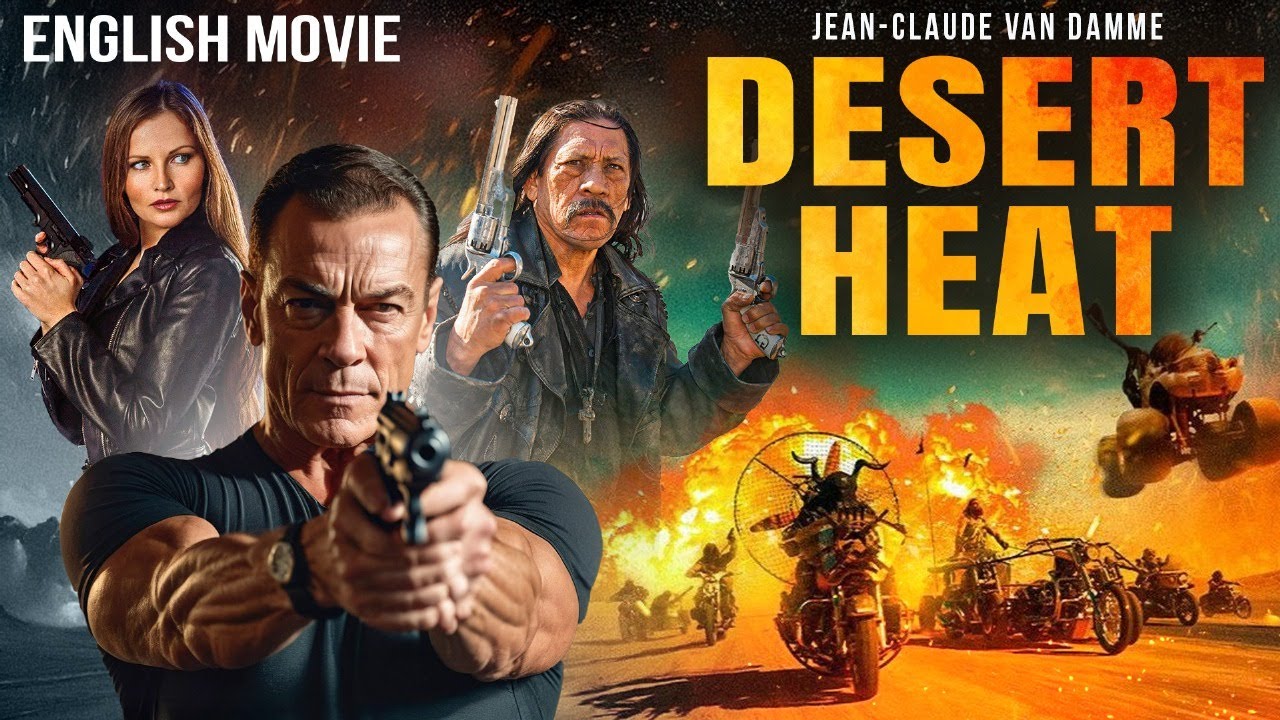
A Return to the Scorched Earth
There is a particular kind of satisfaction that comes from watching a sequel understand its own mythology. Desert Heat 2: Inferno’s Legacy does not merely revisit the scorched landscape left behind by Eddie Lomax; it interrogates what it means to be a legend in a genre that has evolved. Twenty years after the flames died down, the desert still hums with unfinished business, and this film knows exactly how to stoke those embers into something ferocious.

Story and Themes
The premise is elegantly simple, almost classical in its restraint. Inferno, once a symbol of corruption burned clean by Lomax, has become a fortified drug empire under a tyrant known as The Beast. The arrival of a desperate young sheriff is not just a plot device; it is the conscience of the movie, a reminder that violence can be inherited but must be chosen.

At its heart, the film is about legacy. It asks whether justice can be passed down without becoming vengeance, and whether age diminishes purpose or clarifies it. The desert, vast and indifferent, serves as a moral witness. It never forgets, and neither does the story.

Performances
Jean-Claude Van Damme as Eddie Lomax
Van Damme delivers one of his most quietly compelling performances in years. Gone is the elastic bravado of his youth, replaced by stillness and precision. As a sniper perched above the chaos, Lomax feels like a ghost haunting his own legend. Van Damme understands that presence can be louder than motion, and he plays the role with weathered authority.
Scott Adkins as the Young Sheriff
Scott Adkins brings kinetic urgency to the film. His sheriff is not naive, but he is untested by the scale of evil he faces. Adkins excels at conveying resolve through movement, and his martial arts prowess is framed as character rather than spectacle. He is the torchbearer, and the film wisely lets him earn that mantle.
Dave Bautista as The Beast
Bautista is an inspired choice for the antagonist. His physicality is imposing, but it is his restraint that makes The Beast memorable. He plays power as inevitability, a force that believes it has already won. In a genre often crowded with noise, Bautista understands the menace of silence.
Action and Direction
The action choreography is where Desert Heat 2 truly announces itself. The much-discussed Adkins versus Bautista confrontation is not merely a fight; it is a thesis statement. Every punch carries weight, every grapple tells a story. The sequence respects geography, stamina, and consequence, elements often lost in modern editing excess.
Equally effective is the film’s use of vertical space. Lomax operating as a sniper from above creates a visual metaphor for experience looking down on raw ambition. The direction favors clarity over chaos, allowing the audience to feel the impact rather than decipher it.
Visual Style and Atmosphere
The desert is photographed not as a backdrop but as a character. Heat distortion, wide horizons, and scorched architecture create a sense of moral exposure. There is nowhere to hide in Inferno, and the film leans into that truth. The color palette favors rusted oranges and bruised shadows, reinforcing the idea that this world has been burned before.
Why This Sequel Works
- It respects the original while refusing to live in nostalgia.
- It allows its veteran star to evolve rather than repeat himself.
- It introduces new blood with purpose and credibility.
- It treats action as storytelling, not interruption.
Final Verdict
Desert Heat 2: Inferno’s Legacy is a rare sequel that understands time as its greatest asset. It embraces the wrinkles, the scars, and the accumulated wisdom of its genre icons while pushing forward with muscular confidence. This is not just a throwback; it is a conversation between generations, spoken in the universal language of sweat, dust, and consequence.
For fans of hard-edged action cinema, this film delivers catharsis without condescension. The heat is back, yes, but more importantly, it burns with intention.