




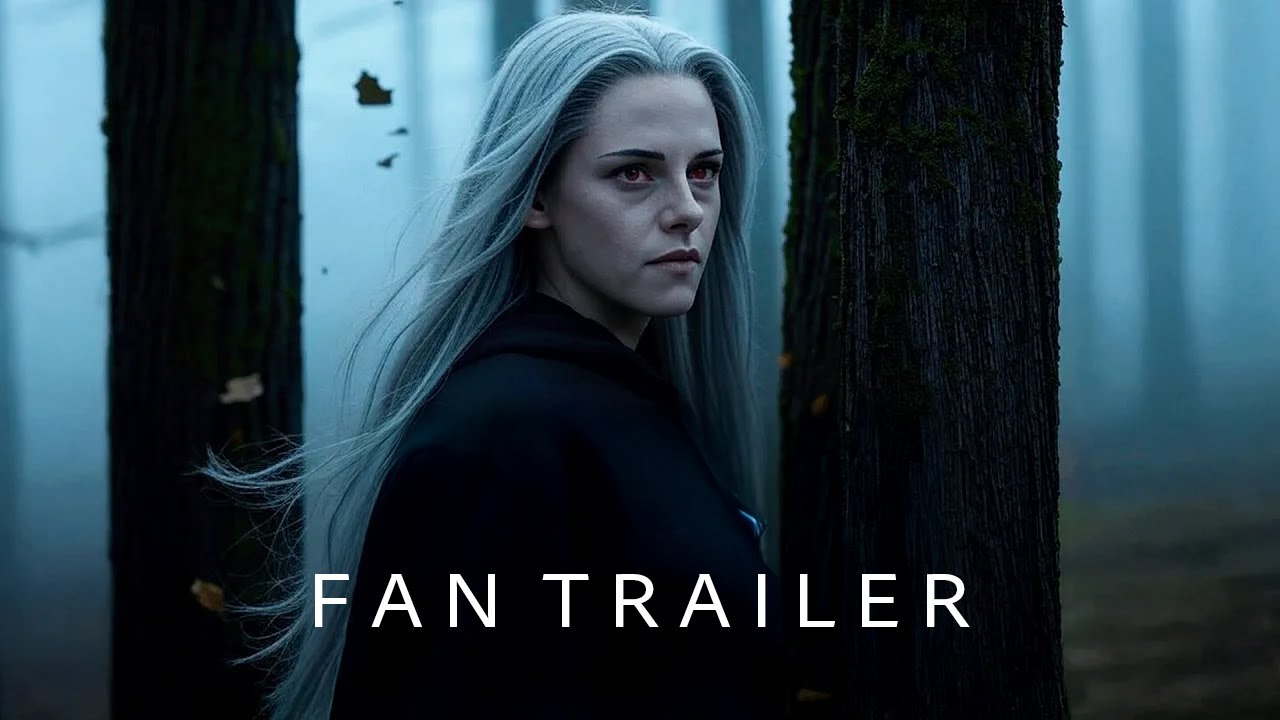
A Return to Forks, Older and Darker
There was always something strangely earnest about The Twilight Saga, a franchise that wore its romantic heart on its sleeve while flirting with operatic darkness. The New Chapter (2025) arrives not as a nostalgic cash-in, but as a deliberate attempt to age the saga alongside its audience. The result is a film that understands its legacy, acknowledges its excesses, and leans into a more somber, reflective tone.

This is not the breathless infatuation of first love anymore. It is about endurance, consequence, and the weight of choices made long ago.

Story and Themes: Love Under Siege
The central conflict introduces an ancient vampire clan whose power feels less like brute force and more like inevitability. Their presence shifts the narrative from personal melodrama to existential threat. Bella and Edward are no longer deciding who they want to be; they are defending what they have already become.

The film explores familiar Twilight themes through a darker lens:
- The cost of immortality versus the fragility of human life
- Love tested not by desire, but by survival
- Family as a choice rather than a bloodline
- Fear of change within long-standing traditions
These ideas are not always subtle, but they are sincere. The screenplay wisely slows down during key emotional moments, allowing silence and glances to speak louder than exposition.
Performances: Familiar Faces, Mature Energy
Robert Pattinson returns to Edward with a restrained intensity that suggests a character worn down by centuries of restraint. His performance is less about brooding beauty and more about quiet resolve. Kristen Stewart’s Bella feels grounded and assured, no longer the observer pulled between worlds, but a participant shaping them.
Taylor Lautner’s Jacob benefits the most from the film’s tonal shift. His arc reflects the strain of loyalty in a world that keeps asking him to compromise his identity. The tension between vampires and werewolves feels earned, rooted in history rather than impulsive rivalry.
The supporting cast, particularly the Cullen family, are given moments of individuality that remind us why this ensemble once captured such devotion.
Direction and Visual Style
Visually, The New Chapter is the most confident entry in the series. The cinematography embraces shadow and atmosphere, trading glossy fantasy for textured realism. Forests feel ancient, battlefields feel cold, and the supernatural elements are integrated with surprising restraint.
Action sequences are impactful without becoming chaotic. The film understands that suspense comes not from constant motion, but from anticipation. When violence erupts, it feels consequential rather than decorative.
Notable Technical Strengths
- Moody, cohesive color grading
- Improved visual effects that enhance rather than distract
- A measured musical score that supports emotion without overpowering it
Pacing and Structure
The film’s greatest strength is also its potential weakness. At times, its deliberate pacing may test viewers expecting nonstop spectacle. However, this patience allows the story to breathe and the characters to evolve naturally.
Rather than racing toward a climax, the narrative builds tension through conversations, uneasy alliances, and the looming sense that peace is temporary.
What Works and What Doesn’t
What Works
- More mature emotional storytelling
- Strong character continuity with the original saga
- A villainous threat that feels genuinely dangerous
What Doesn’t
- Some exposition is overly explicit
- New characters could use deeper development
- The film relies on familiarity, which may limit new audiences
Final Verdict: A Worthy Evolution
The Twilight Saga: The New Chapter does not reinvent the franchise, but it does refine it. This is a film aware of its past and unafraid to confront it. It treats love not as fantasy fulfillment, but as responsibility, sacrifice, and persistence.
For longtime fans, it offers emotional closure and renewed relevance. For skeptics, it may come as a surprise: a supernatural romance that has learned to grow up.
Love, it suggests, does not conquer all. But it is often the only reason worth fighting.