




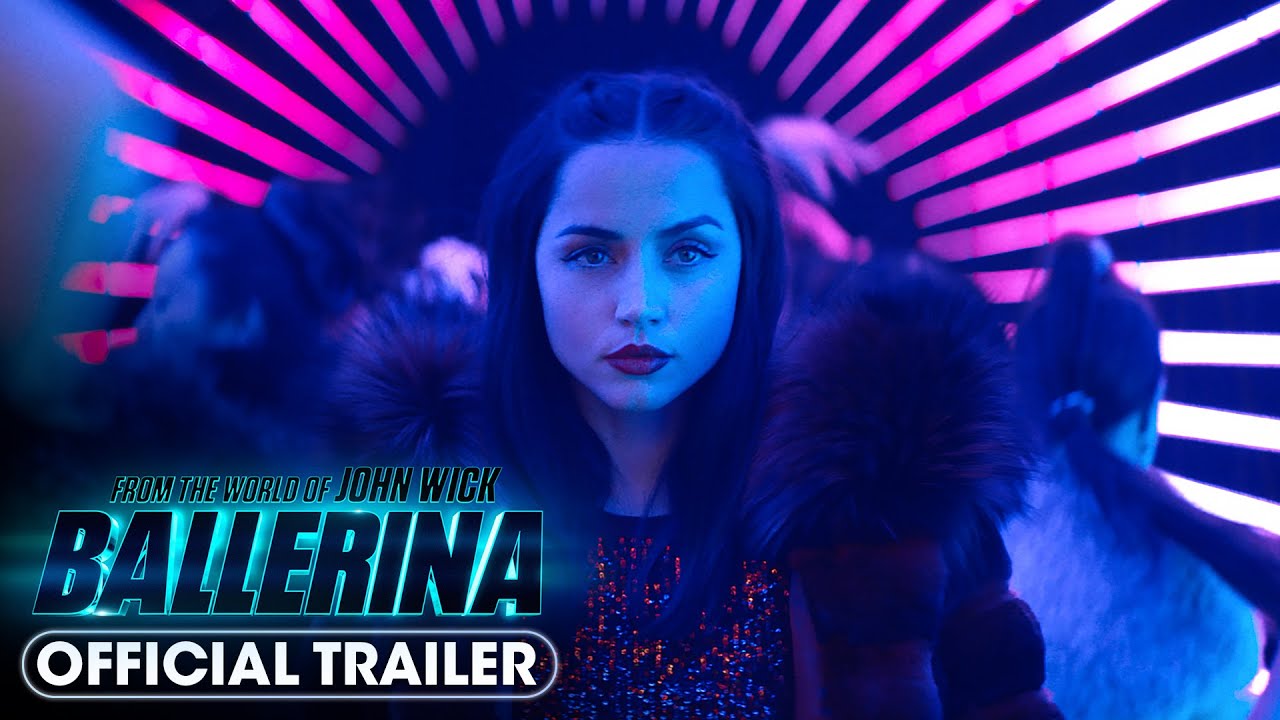
A Lethal Dance Set in a Familiar World
After more than a decade of watching action cinema chase louder explosions and faster edits, it is refreshing to see a film that understands rhythm. Ballerina (2025) steps into the assassin underworld with pointed shoes instead of combat boots, and while its lineage is recognizable, its intentions feel personal. This is not merely a spin-off; it is a character study that happens to be delivered through bone-crunching choreography.

Story and Narrative Focus
The film centers on a trained killer whose upbringing in classical ballet becomes both metaphor and method. Revenge may be the engine that drives the plot forward, but the film is more interested in the cost of obsession than the body count along the way. The screenplay keeps its dialogue sparse, allowing silence and physical movement to tell the story. That restraint gives the film a contemplative quality rare in modern action cinema.

Rather than piling on convoluted mythology, the narrative stays disciplined. Each scene exists to deepen our understanding of the protagonist or to test her resolve. The result is a lean story that trusts the audience to read between the lines.

Performance and Characterization
The lead performance anchors the film with intensity and surprising vulnerability. This is a character trained to suppress emotion, yet small gestures betray a lifetime of loss and discipline. The physical performance is demanding, but it never feels like a stunt reel in search of a plot. Every movement, whether graceful or brutal, serves character.
Supporting roles are used economically. Mentors, rivals, and shadowy figures from the criminal underworld appear briefly, but each leaves an impression. No one overstays their welcome, and that economy of character work keeps the focus where it belongs.
Direction and Visual Style
The direction understands that action has meaning only when space is clear and motion is readable. Fight scenes are staged like dances, emphasizing balance, timing, and consequence. The camera rarely cheats. When violence happens, it lands with weight, not spectacle for its own sake.
Visually, the film favors cool palettes and controlled lighting, echoing the emotional distance of its protagonist. Occasional bursts of color, often tied to the world of ballet, provide contrast and thematic resonance. This visual discipline gives the film a cohesive identity.
Sound Design and Music
Music plays a crucial role in shaping the film’s tone. Classical elements blend with modern scoring, creating a soundscape that mirrors the collision of art and brutality at the heart of the story. Silence is used just as effectively. In several key moments, the absence of music heightens tension far more than any swelling orchestra could.
Themes Beneath the Action
At its core, Ballerina is about control. Control over the body, over emotion, and over fate. The film asks whether mastery is freedom or another kind of prison. Violence is not celebrated; it is portrayed as a skill learned at a terrible price.
- The intersection of art and violence
- Identity shaped by discipline
- The emotional cost of revenge
- Loneliness within rigid systems
Strengths and Weaknesses
What Works
- Strong central performance
- Clear, elegant action choreography
- Focused storytelling with thematic depth
What Holds It Back
- A familiar revenge framework
- Limited exploration of secondary characters
Final Verdict
Ballerina (2025) proves that action cinema can still be thoughtful, disciplined, and emotionally resonant. It does not reinvent the genre, but it refines it with care and intention. Like a well-executed dance, every step feels deliberate, every pause earned. This is a film that respects its audience and its protagonist enough to let quiet moments speak as loudly as gunfire.
For viewers tired of noisy excess and empty spectacle, Ballerina offers something sharper and more controlled: an action film with a soul.