




Introduction
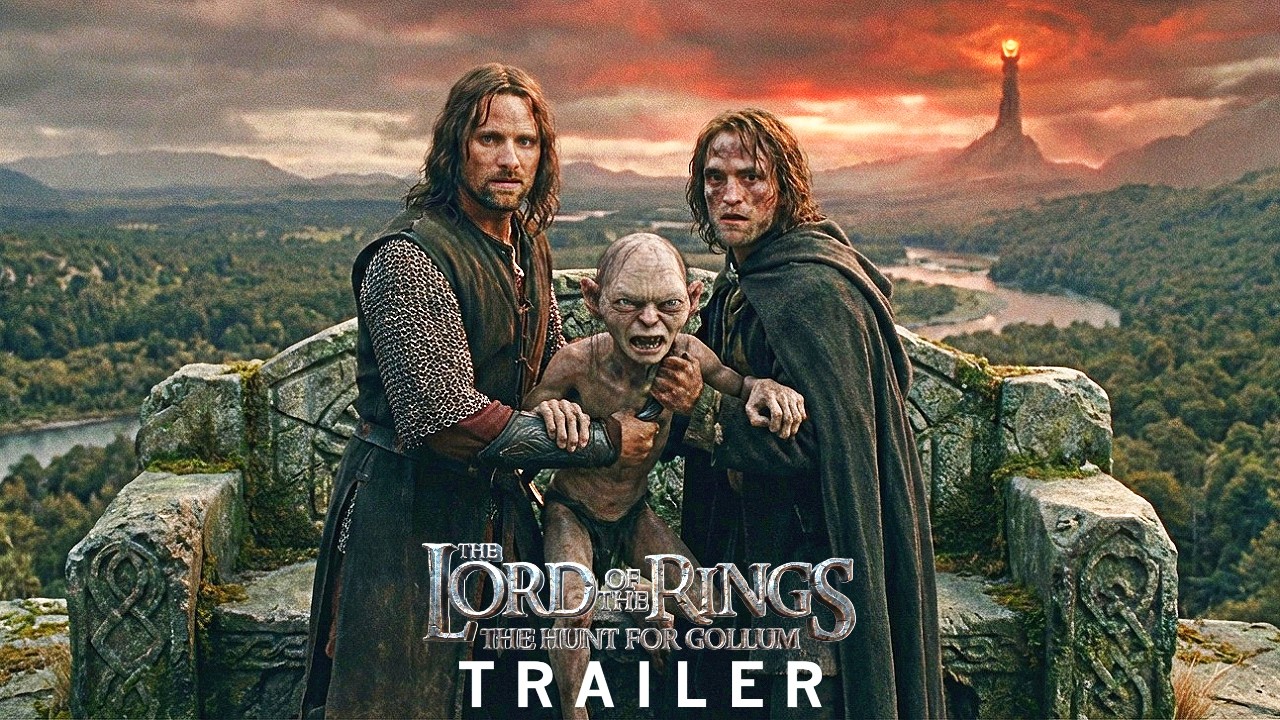
Middle-earth has always been a land defined by grand battles and heroic quests. But in the latest concept trailer for The Lord of the Rings: The Hunt for Gollum (2027), the stakes shift dramatically. The focus moves away from epic spectacles and toward psychological tension. Directed by Andy Serkis, who also returns to his iconic role as Gollum, this story promises to explore darker and more subtle aspects of Tolkien’s world.

A New Chapter in Middle-earth
The concept trailer hints at a Middle-earth where the narrative is no longer driven by armies or massive conflicts. Instead, it centers on the quiet, unnerving pursuit of Gollum, a character whose knowledge is both invaluable and dangerous. This isn’t about rescuing him; it’s about containing him. The trailer suggests that Gollum holds secrets that could unravel the very fabric of the free peoples’ world.

The Nature of the Search
Gandalf’s mission, as depicted in the trailer, isn’t the familiar, heroic journey we’ve come to expect from him. This isn’t a tale of camaraderie or rescue, but one of careful surveillance and a quiet, mounting tension. As Gandalf and his companions draw nearer to Gollum, the sense of urgency grows. It becomes clear that every step forward is also a step deeper into a web of secrets that were never meant to be uncovered.

Darkness Unfolding
As the hunt progresses, the trailer captures a palpable sense of dread. The world doesn’t erupt into a war like in previous Lord of the Rings stories; instead, it holds its breath. Fear, not hope, becomes the driving force. The free peoples of Middle-earth are not preparing for battle; they are preparing for something far more insidious. Surveillance replaces fellowship, and fear replaces the usual optimism found in Tolkien’s world. It’s an unsettling shift in tone, one that brings the threat of Sauron closer without ever showing him directly.
The Psychological Tension
What sets The Hunt for Gollum apart is its subtlety. This isn’t an action-packed adventure but a psychological thriller set in a fantastical world. The trailer doesn’t rely on visual spectacle or fast-paced action to capture attention. Instead, it suggests that the most dangerous threat is not always the one you can see, but the one you can never fully understand. Gollum isn’t just a creature to be captured; he is a symbol of the dangerous truths that lie at the heart of Middle-earth, truths that, once discovered, cannot be undone.
Andy Serkis’s Dual Role
As both the director and the actor portraying Gollum, Andy Serkis brings a unique depth to this project. His understanding of the character, honed over years of playing him in the Lord of the Rings and The Hobbit trilogies, adds a layer of complexity to the story. It’s clear that Serkis isn’t just revisiting a beloved role, but exploring new dimensions of it. In this iteration, Gollum is not just the scheming, split-personality character we know; he is a vessel of forbidden knowledge, a creature whose very existence threatens the balance of the world.
A Warning, Not a Fantasy Adventure
Perhaps the most striking aspect of this concept trailer is how it reframes the traditional fantasy narrative. While previous films in the Lord of the Rings series have been about heroes banding together to confront an overwhelming evil, The Hunt for Gollum is more about the pursuit of knowledge that should never have been found. It serves as a warning: some truths, once uncovered, cannot be controlled—or unlearned. The psychological tension becomes the central conflict, as the audience, along with the characters, are forced to reckon with the consequences of digging too deep.
Conclusion
The Hunt for Gollum (2027) offers a fresh, more cerebral take on Tolkien’s world. It’s a story less about the clash of armies and more about the quiet dread that comes from knowing something you can never forget. With Andy Serkis at the helm, this film promises to be a unique entry in the Lord of the Rings saga, one that focuses on the quiet, psychological struggle that often goes unnoticed in epic tales of heroism.