


An Unlikely Return to Nowhere
There are childhood memories that age like photographs, fading gently with time. And then there are memories that never quite let go, lingering in the back of the mind, waiting to resurface in the dark. Courage the Cowardly Dog (2026), a live-action reimagining of the beloved Cartoon Network series, belongs firmly in the latter category. What was once a surreal blend of comedy and creepiness has been transformed into a full-blooded psychological horror-fantasy that understands exactly why the original unsettled us in the first place.

Set once again in the middle of Nowhere, the film reframes isolation not as a joke, but as an existential threat. The farmhouse is no longer merely quirky; it is a pressure cooker for dread, a place where the silence itself feels hostile. This is not nostalgia repackaged for easy consumption. It is nostalgia interrogated, distorted, and pushed into frightening new territory.

Performances That Ground the Madness
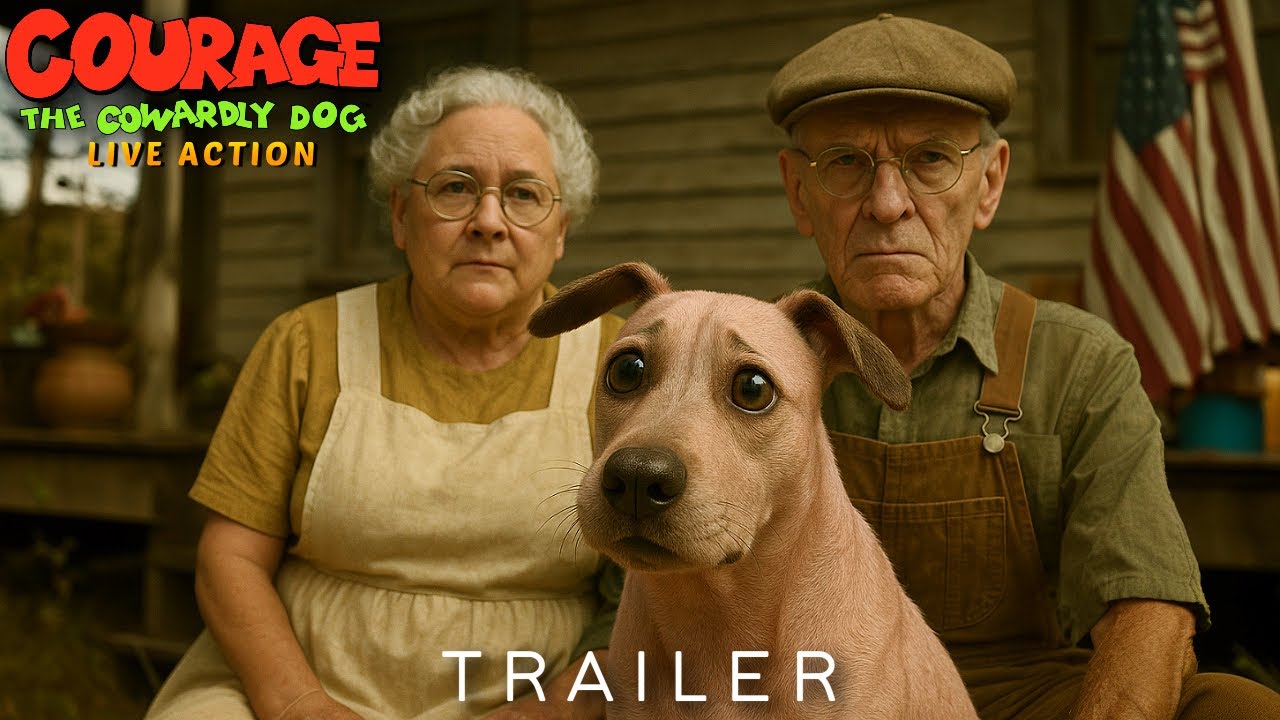
One of the film’s smartest decisions is its casting. Liam Neeson’s Eustace Bagge is a revelation, not because he softens the character, but because he deepens him. His gravelly voice and imposing presence turn Eustace from a cartoon bully into a genuinely intimidating figure, a man whose cruelty feels rooted in fear and bitterness. Neeson understands that menace does not require volume; sometimes it is most effective when it is cold and casual.

Helen Mirren, as Muriel Bagge, provides the emotional center the film desperately needs. Her warmth is not exaggerated or sentimental. It is quiet, lived-in, and deeply human. Mirren’s Muriel feels like someone who has chosen kindness as an act of defiance against a hostile world. In a film filled with grotesque imagery and supernatural threats, her gentleness becomes a form of resistance.
The Pink Dog at the Center of the Storm
Then there is Courage himself, realized through ultra-realistic CGI that walks a delicate line between the uncanny and the endearing. His wide eyes, trembling body language, and expressive face convey terror with heartbreaking clarity. This is not a dog who enjoys being brave; this is a creature who is afraid all the time and acts anyway. The film wisely keeps Courage largely nonverbal, allowing his fear and determination to speak through movement and expression.
In many ways, Courage becomes the film’s moral compass. His repeated acts of protection are not heroic in the traditional sense. They are instinctive, desperate, and deeply emotional. The film’s recurring idea is simple but powerful: bravery is not the absence of fear, but the decision to love despite it.
From Creepy Comedy to Existential Horror
The tonal shift from animated series to live-action horror is handled with surprising confidence. The film leans heavily into atmosphere, using long silences, low-frequency sound design, and stark cinematography to create unease. Jump scares are present, but they are not the primary weapon. The real horror comes from the feeling that something is always watching, always waiting just beyond the edge of the frame.
The monsters and supernatural visitors are grotesque, inventive, and deeply unsettling. They feel less like villains and more like manifestations of fear itself. Each encounter functions as a twisted parable, reflecting anxieties about isolation, aging, and the fragility of safety. The farmhouse is not just under siege; it is being tested, morally and psychologically.
Visual Style and Direction
Visually, the film embraces a muted, desaturated palette that drains warmth from the landscape. Nowhere feels endless and oppressive, a place where escape is more concept than possibility. The camera often lingers too long on empty spaces, daring the audience to imagine what might fill them. It is a confident, unsettling approach that trusts the viewer’s imagination to do much of the work.
The direction shows a clear understanding of restraint. Rather than overwhelming the audience with constant spectacle, the film allows tension to build slowly. When violence or terror erupts, it feels earned and consequential, not gratuitous.
Themes Beneath the Terror
At its core, Courage the Cowardly Dog (2026) is about protection and devotion. The repeated line about doing terrible things for love takes on new meaning here, reframed not as a joke, but as a quiet thesis statement. Courage’s loyalty contrasts sharply with Eustace’s selfishness, creating a moral tension that drives the narrative forward.
The film also explores the cost of isolation. Living in Nowhere is not merely a geographical condition; it is a psychological one. Cut off from community and comfort, the characters are forced to confront their fears without outside help. In this sense, the horror feels uncomfortably intimate.
Final Verdict
This live-action adaptation should not work. It is too strange, too dark, and too emotionally sincere for the current trend of safe reboots. And yet, it works precisely because it refuses to dilute what made the original special. It respects the intelligence of its audience and trusts that fear, when handled thoughtfully, can be meaningful.
Courage the Cowardly Dog (2026) is not just a bold reimagining; it is a surprisingly moving meditation on fear, love, and the quiet heroism of those who protect others despite being terrified themselves. Chilling, creative, and courageously weird, it turns childhood unease into something genuinely profound.
Rating
- Overall Score: 9.2/10
- Genre: Psychological Horror, Fantasy
- Recommended For: Fans of dark reimaginings, atmospheric horror, and thoughtful adaptations